Writing a New Book | Why Starting is the Second Hardest Thing to Do

Beginning anything new is always a challenge, one that most of us face almost every day. Whether it’s moving to a new city, the first day at a new job, a first date, or something as small as a new diet, every fresh beginning feels like a new chapter in the story of our lives. Imagine the jitters that kick in at the thought of living in a new city surrounded by people you’ve never met before, or the nervousness before that first date, or the awkwardness of settling into a new workspace. The truth is, the first step is often the hardest to take.
Writing a book is no different. Starting a new one feels like opening a bag full of mixed emotions. Excitement, fear, doubt, and curiosity, all hitting at once. It’s thrilling and terrifying in equal measure. The bottom line is that for any author, starting a book is probably the second most difficult thing to do. The first? Finishing it. But, we won’t be talking about finishing a book just yet, as the thought of getting started is already daunting enough.
Here are a few reasons why starting a book takes more courage than most people realise:
Cloud of doubt

No matter how sunny it is outside, starting a new book or story somehow feels gloomy because of the cloud of doubt that hangs over you. Before you even put pen to paper, before a single word is written, there is already that cloud of hesitation, of second-guessing, of what ifs. What if no one likes it? What if my story is not good enough? What if it is not even story-worthy? What if it does not turn out as good as it sounds in my head? What if my words do not make anyone feel anything?
Confidence is shaky. Not just confidence in your abilities, but in your idea, your skill set, your story, and even your audience. Somewhere in the back of your head, you hear that voice asking, “Who even reads books anymore?”.
And the more you think about it, the heavier that cloud becomes.
Actually Working Instead of Planning
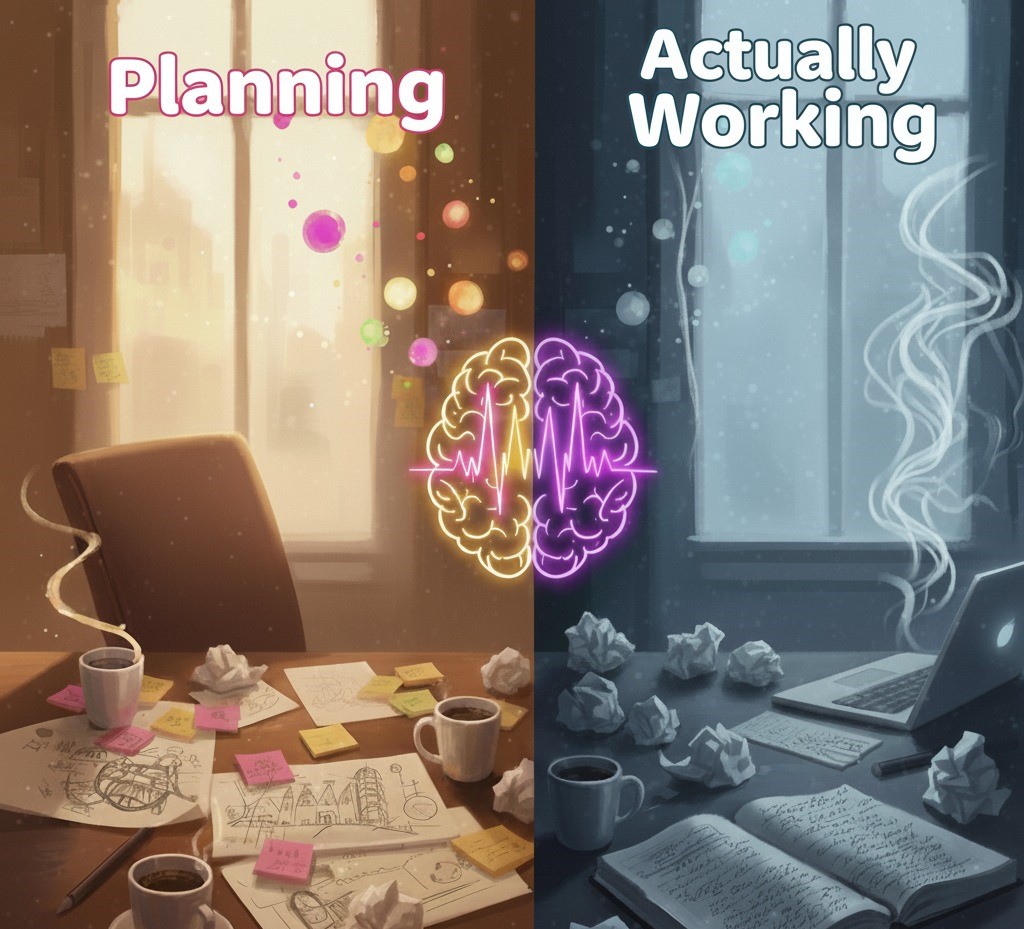
I can’t be the only one who’s sat with a bunch of friends to plan a startup that never took off, or planned a trip that only existed in the group chat. I recently read that planning gives a quick dopamine hit by letting your brain imagine success, creating a false sense of accomplishment. Doing, on the other hand, provides a slower but more meaningful dopamine release tied to real progress, which explains why so many plans feel complete before they’ve even begun.
Writing a book is no different. It’s all fun and games when you’re planning it — imagining scenes in your head, sketching characters, daydreaming about that perfect ending. But when it’s time to actually sit down and do the work, that’s where the real test begins. Because writing a story demands consistency, patience, and a level of commitment that most plans fail to achieve.
And that’s exactly where most of us get stuck, caught between the excitement of planning and the reality of doing. We know what needs to be done, but somehow, we keep putting it off. Is it just laziness? No, it’s the power. The power to delay!
Power to Delay
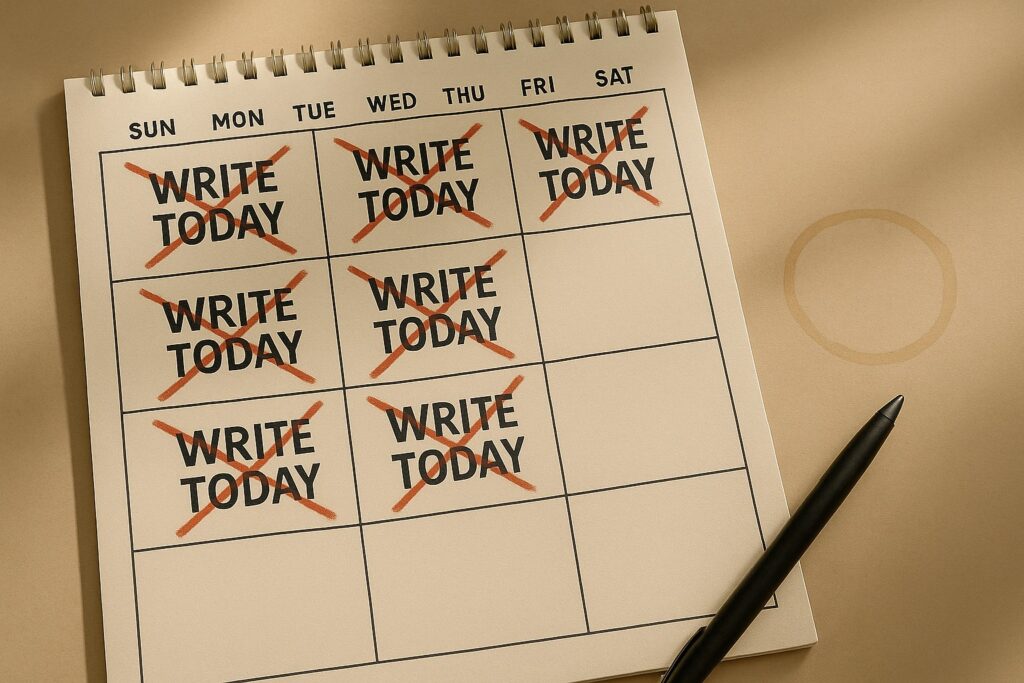
Let’s face it, chances are that when you’re writing a book, you’re your own boss. You set the deadlines. You have complete control. And that gives you the power to delay because who are you answerable to?
It’s no secret that we naturally put off the hard, difficult, or uncomfortable tasks. Writing a book is exactly that. It’s challenging, demanding, and often intimidating.
I remember when I started my first book, Luck, Fluke or Destiny? For the first few months, I kept delaying the process, telling myself it wasn’t the right time yet.
Maybe I should be in a better mood.
Maybe I need a new table and chair.
Maybe the setup isn’t right.
We convince ourselves that we’re waiting for the perfect moment, the right time, the right mood, the right environment.
But the reality is, there is never a perfect time, or maybe it always is! Half glass empty or half glass full, that choice is always ours.
Time Management
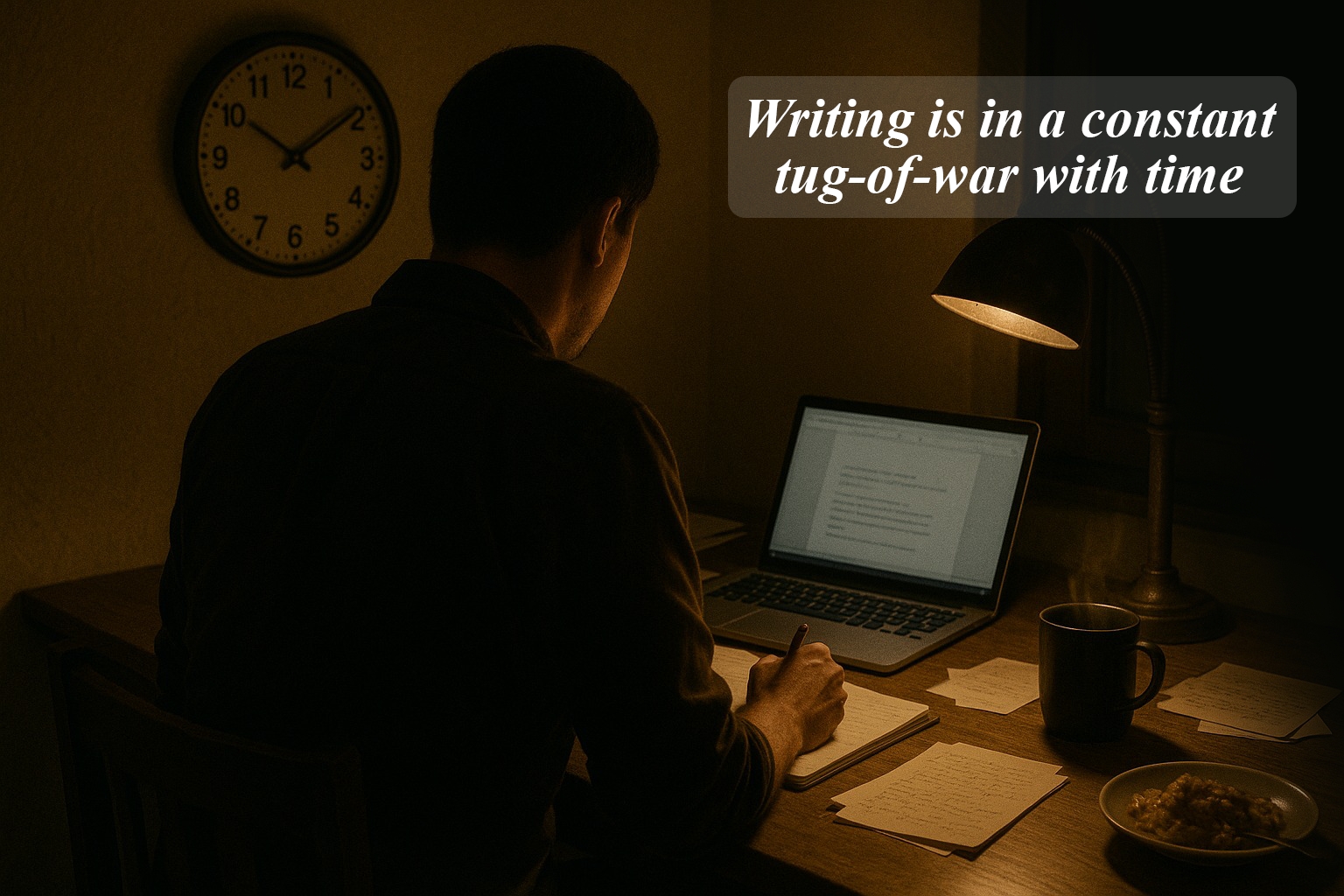
Alright, you have an intriguing story, interesting characters, and a bunch of ideas buzzing in your head, but the most important thing to actually bring it all to life is time.
Chances are, if you’re writing a book, you’re not just writing a book. As relaxing as it sounds to spend your days sipping coffee and scribbling in your notebook or typing on your laptop, that’s rarely the case for most of us. Maybe you’re working, studying, managing a business, or handling a family. Whatever it is, writing almost always has to fight for its place.
When I was writing Once in Cape Town or Luck, Fluke or Destiny?, time was not always on my side. I used to come home after hours of flying, make dinner, try to switch off from the day, and then somehow gather the energy to sit and write. Can you imagine the overflow of creative juices at that hour? Exactly.
Perhaps that’s where the love for writing and the passion for storytelling come in. Writing is often perceived as a hobby, something people do in their free time. But if one were to write a book only in their free time, I’m not sure how many years it would take for that book to come into existence.
Crafting a story requires time, and not just free time here and there, but dedicated time. Time that comes at the cost of rest, comfort, and sometimes even sleep. After all, you don’t find time to write, you make it.
Fear of not finishing
Imagine putting your heart and soul into something that never reaches completion.
Imagine digging a tunnel that never sees the light, or piecing together a puzzle only to realize the last piece is missing.
Writing a book can feel exactly like that. Finishing one is often the hardest thing to do, and that very thought is what makes starting so difficult in the first place.
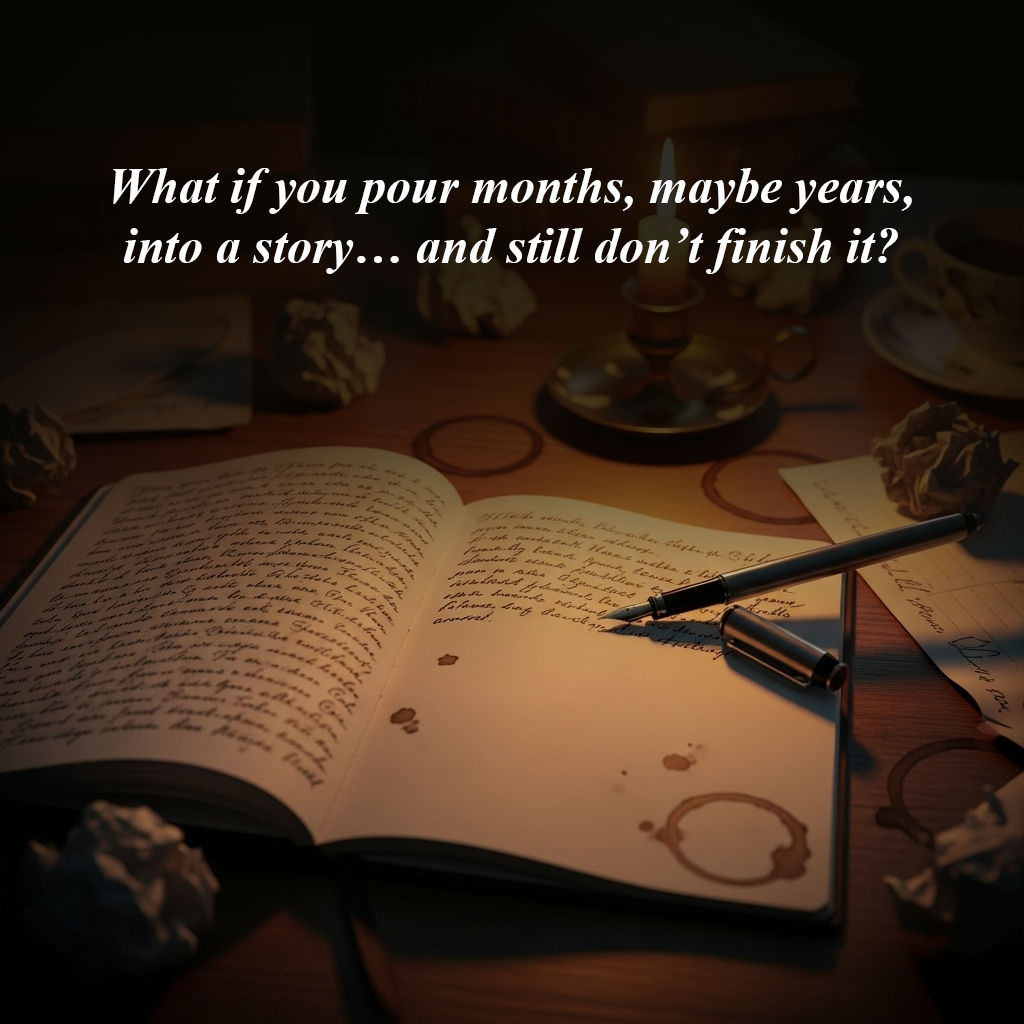
What if you pour months, maybe years, into a story… and still don’t finish it?
The moment that doubt creeps in, the fear of not finishing what you started, the journey begins to feel heavier, slower, and somehow endless. Maybe pointless.
Start-Stop Loop
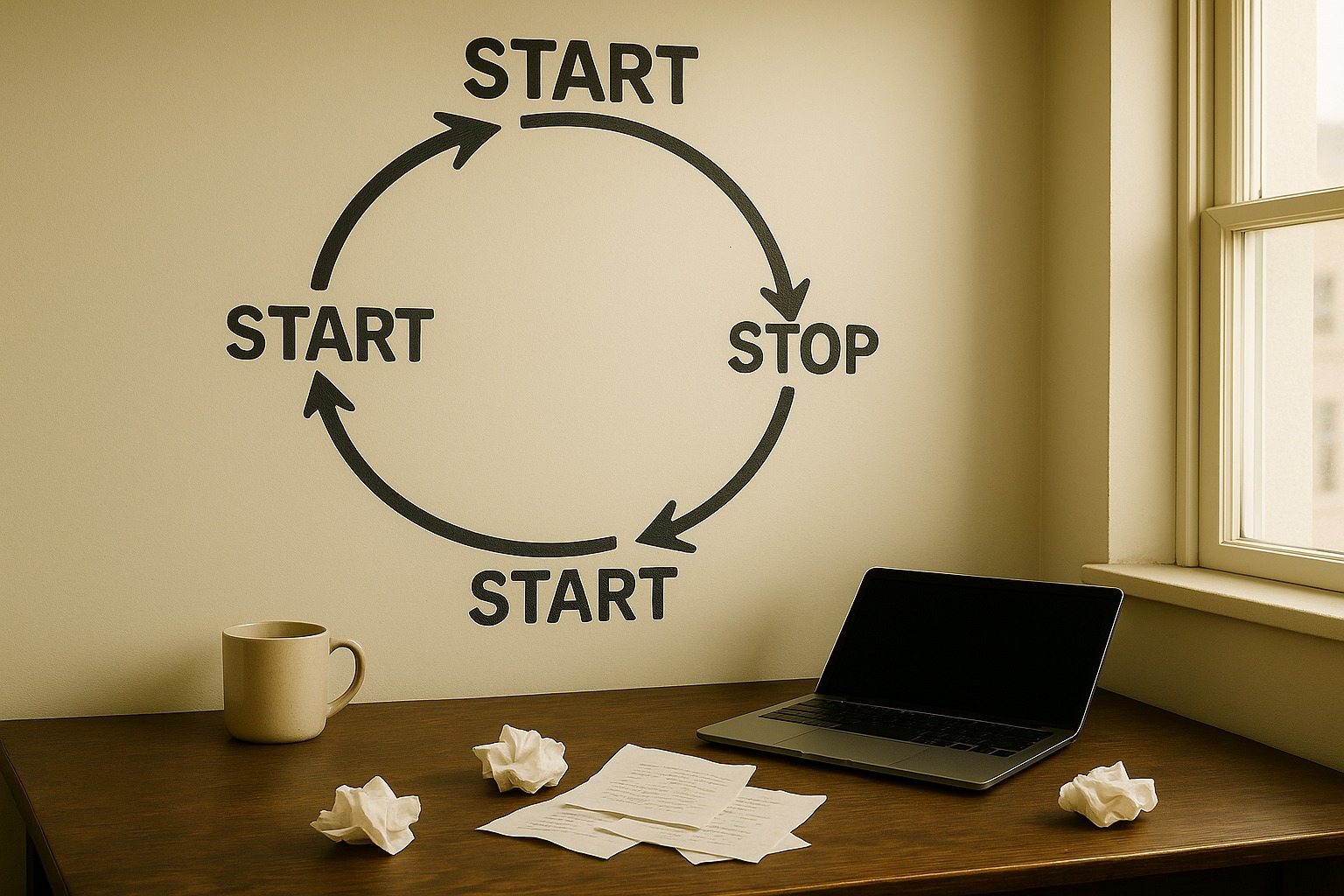
For my book Once in Cape Town, I started with my protagonist in a car. Then I scratched that and put him in a plane, after all, he’s a pilot. Then I changed it again and got him back on the ground at an airport, similar to my first book. And then, I scrapped all of that and decided to begin the story with a house party.
Now imagine, after all that hopping from one vehicle to another, the protagonist ends up trapped within four walls, surrounded by people playing quiz cards and drinking his expensive alcohol. Sounds frustrating, doesn’t it?
That’s the start-stop loop writers live in. You begin, pause, overthink, restart, and then scrap it all again. Yes, it’s part of the process, but it’s also one of the easiest points to give up after a few cycles of start–stop–start–stop.
Maybe it’s because we’re all chasing that blockbuster beginning, the one that sets the tone, hooks the reader from the first page, and makes the book impossible to put down. Think of how a great movie introduces its hero or opens with a scene that locks your attention instantly. A book works the same way; the first chapter has to make you stay.
But the truth is, while a strong beginning is important, the search for that perfect start comes with a lot of not-so-perfect ones. And that’s what makes starting a book both frustrating and fascinating.
Risk to Reward Ratio

And lastly, it all comes down to that one thing we do before investing in anything, calculate the risk to reward ratio. Well, you may not be investing a lot of money here, but the time, energy, and mental effort required make writing a book an expensive investment.
Writing a book can feel like pouring your soul onto paper, only to have that voice in the back of your head questioning the worth of it all. Months, maybe years, of your time for a reward that is uncertain. I agree, writing a book is a gamble and the risk to reward ratio is not always promising.
But here is the thing. Maybe the ratio does not look great on paper, but having your name on something that is entirely yours brings a whole different kind of reward. A sense of pride, ownership, and accomplishment that nothing else can match.
The real question is not “Who reads books anyway?” The real question is, “How many people can honestly say they have created something from nothing? How many can proudly claim, ‘I made this’?” If you can raise your hand, then I am sure it is a gamble worth taking. After all, no one can take that away from you.
Take the First Step
Maybe you’re not facing all of these challenges.
Maybe just a few.
Or maybe every single one ticks a box in your “why my novel isn’t coming to life” checklist.
The whole point is, it’s normal. Every writer battles through their own version of chaos before finding flow. What matters is that you keep believing in your story, in the idea that made you think, “I should write a book.”
So pick up a pen and start scribbling. Or, if you’re a laptop person, start typing. How you start doesn’t matter; the point is to start. Take that first step. Who knows, that rough idea in your head might just turn out to be the next bestseller.